Competition

ITF tournaments test the whole art — not just fighting. Four classic events measure form, control, power and spectacular technique.

The Four Events

Individual competitors may enter some or all of these; major championships also feature team versions.

🥋

Patterns · Tul

Competitors perform a designated pattern (often one chosen by the competitor and one drawn by the ring). Judges score technical content, accuracy, power, balance, rhythm and correct sine-wave motion. Usually run as head-to-head pairs decided by flags, or by points.

🥊

Sparring · Matsogi

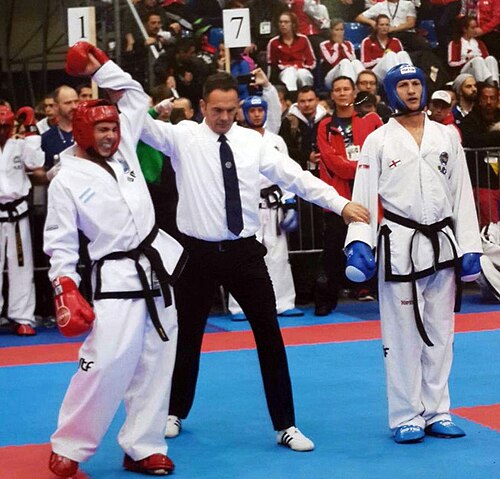
Free sparring under semi-contact rules, with foot and hand protectors. Points are scored for controlled, accurate techniques to legal target areas. Bouts run for timed rounds; the higher score (or a knockdown advantage) wins.

🪵

Power Test · Wiryok

Competitors break boards (or measuring boards/machines) to demonstrate raw force with set techniques — typically forefist punch, side piercing kick, knife-hand strike, turning kick and back piercing kick. Most boards broken wins.

🤸

Special Technique · Teukgi

Jumping and flying kicks break a target fixed at height or distance — flying high kick, flying side piercing kick, overhead (high) kick, and more. The greatest height/distance broken wins.

Team events add team patterns, team sparring and pre-arranged free sparring / demonstration, where choreographed sequences of throws, breaks and flying kicks are judged for difficulty and presentation.

Sparring Scoring

ITF sparring rewards difficulty: kicks score more than punches, and high or jumping techniques score most. Exact values vary slightly between ITF organisations, but the typical scale is:

TechniqueTargetPoints (typical)
Hand attackMiddle or high section1
Foot attackMiddle section2
Foot attackHigh section3
Jumping foot attackMiddle section3
Jumping foot attackHigh section4–5

Legal targets & contact

  • Targets: the front and sides of the head/neck and the front and sides of the trunk above the belt.
  • Contact is controlled (semi-contact) — excessive force is penalised.
  • Prohibited: attacks below the waist, attacking a fallen opponent, attacks to the back or spine, knees, head-butts, and biting.
  • Penalties range from warnings (gyong-go) to minus points (gam-jeom) and disqualification.

Equipment & Categories

The standard ITF sparring kit. Hand and foot protectors are mandatory; the rest depends on the division and rules.
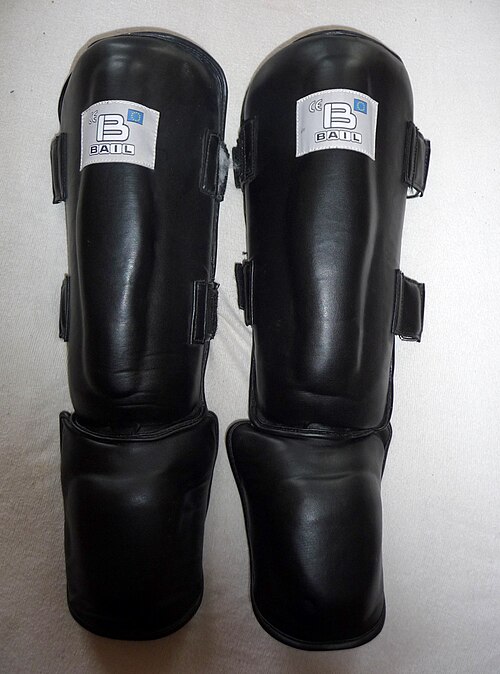
Head guardMori bohodae
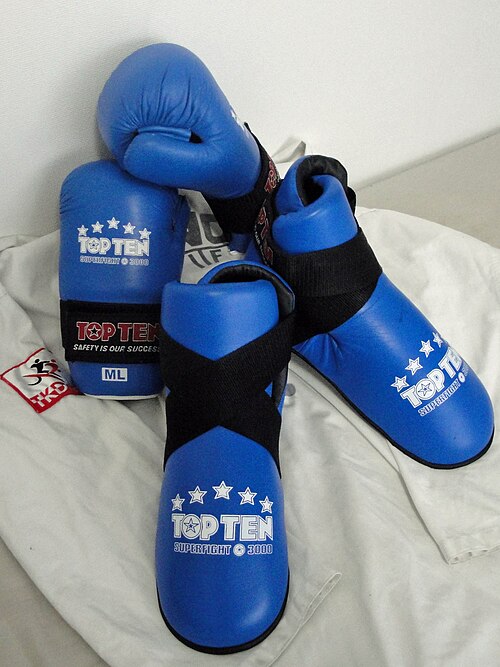
Hand protectorSon bohodae
Foot protectorBal bohodae
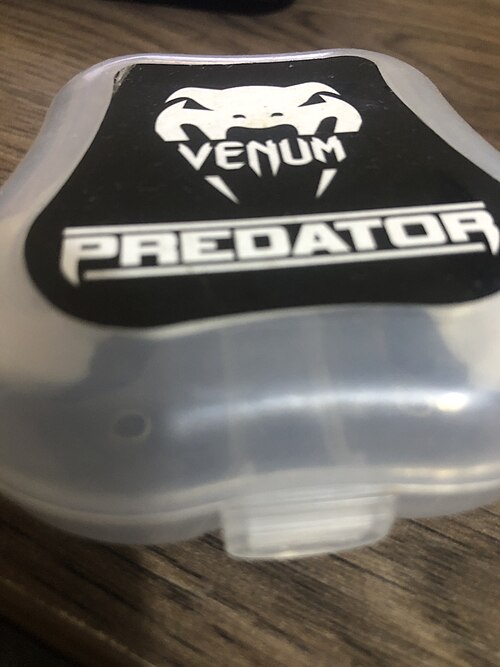
MouthguardIpsogae
Groin guardNangsim bohodae
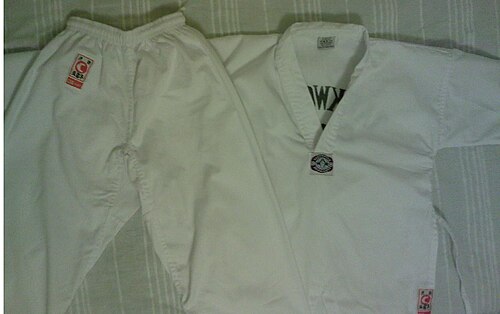
DobokUniform

Protective equipment

  • Approved hand protectors and foot protectors (mandatory).
  • Mouthguard and groin guard.
  • Optional/required by rules: forearm and shin guards, and headgear for some divisions (especially juniors).
  • Clean white dobok with correct federation and rank markings.

Competition categories

  • Age: typically junior, senior and veteran divisions.
  • Gender: separate male and female divisions.
  • Grade: coloured-belt and black-belt (dan) divisions.
  • Weight: sparring is divided into weight classes; patterns and power by grade/age.

Championships & Structure

Competition is organised in a pyramid from club to international level:

  • Club & regional tournaments — entry-level events, often the first competition a coloured belt enters.
  • National championships — select each country's representatives.
  • Continental championships — e.g. European, Asian, Pan-American, organised by continental federations.
  • ITF World Championships — the pinnacle, held since 1974 (first in Montreal, Canada), typically every two years, with separate junior and senior events.

Because the ITF divided into several bodies after 2002, more than one organisation now stages its own “World Championships”. They share the same four events and the same patterns, so the format is familiar across all of them.

Beyond medals, the tournament is treated as an extension of the dojang: competitors bow, show courtesy to opponents and officials, and accept the result with self-control — the tenets in action.
🦵

Techniques & Motion

The kicks and stances behind the scoring.

Open techniques →
🥋

The 24 Patterns

The tul performed in patterns events.

Explore patterns →
⚖️

Fundamentals

The tenets that govern conduct in the ring.

Learn fundamentals →